From requirement to lighting solution:
Customized and modular lighting solutions – developed, manufactured, and implemented from a single source
A train station that provides safety at night, a facade whose lighting defines rather than decorates the architecture, a concert hall where the lighting completes the spatial effect: such results cannot be achieved by selecting a catalog product. They are created when digital development, lighting engineering, and manufacturing are integrated into a continuous process.
We have been developing and manufacturing lighting solutions for architecture, infrastructure, and public spaces for over 40 years. This article explains how this process operates and why it has a significant impact on the quality of the result.
At Light + Building 2026, we will present our development and manufacturing process, supplemented by a selection of luminaires and information on completed projects.
Planning and product development
Requirements analysis: the basis of every lighting solution
Every project begins with a structured requirements analysis in close consultation with architects, lighting designers, engineers, and building contractors. Usage scenarios, architectural conditions, normative specifications, safety requirements, and operational and maintenance aspects are systematically recorded and evaluated.
Technical framework conditions:
- Lighting requirements: illuminance levels, uniformity, glare limitation
- Functional zones: Orientation, wayfinding, accentuation
- Environmental conditions: indoor/outdoor areas, humidity, pollution, vandalism protection
- Integration into existing building and control systems
Project-specific requirements:
- Design specifications
- Sustainability and circular economy
- Budget and time constraints
- Maintenance and service concepts
Depending on the project, the analysis process may include, for example, precise measurement of the installation site using 3D laser technology. This allows static preliminary assessments to be made and the installation to be precisely integrated into existing buildings and support structures.
The result of the analysis phase is a robust requirements profile and a decision on whether to implement a solution with modular elements or a new development is necessary.
Rough lighting concept: System in detail
Based on the requirements profile, LMT then creates the rough lighting concept. It describes the system architecture of the lighting solution, whether as a configurable modular solution or a customized development.
Modular lighting system: The modular principle allows configuration from pre-qualified components and properties:
- LED modules according to luminous flux, color temperature, color rendering, and efficiency
- Ballasts (drivers), including dimming and emergency lighting functions, if required
- Light control: reflector, optics, shielding
- Safety and emergency lighting, if required
- Housing, mounting type, materials, protection classes
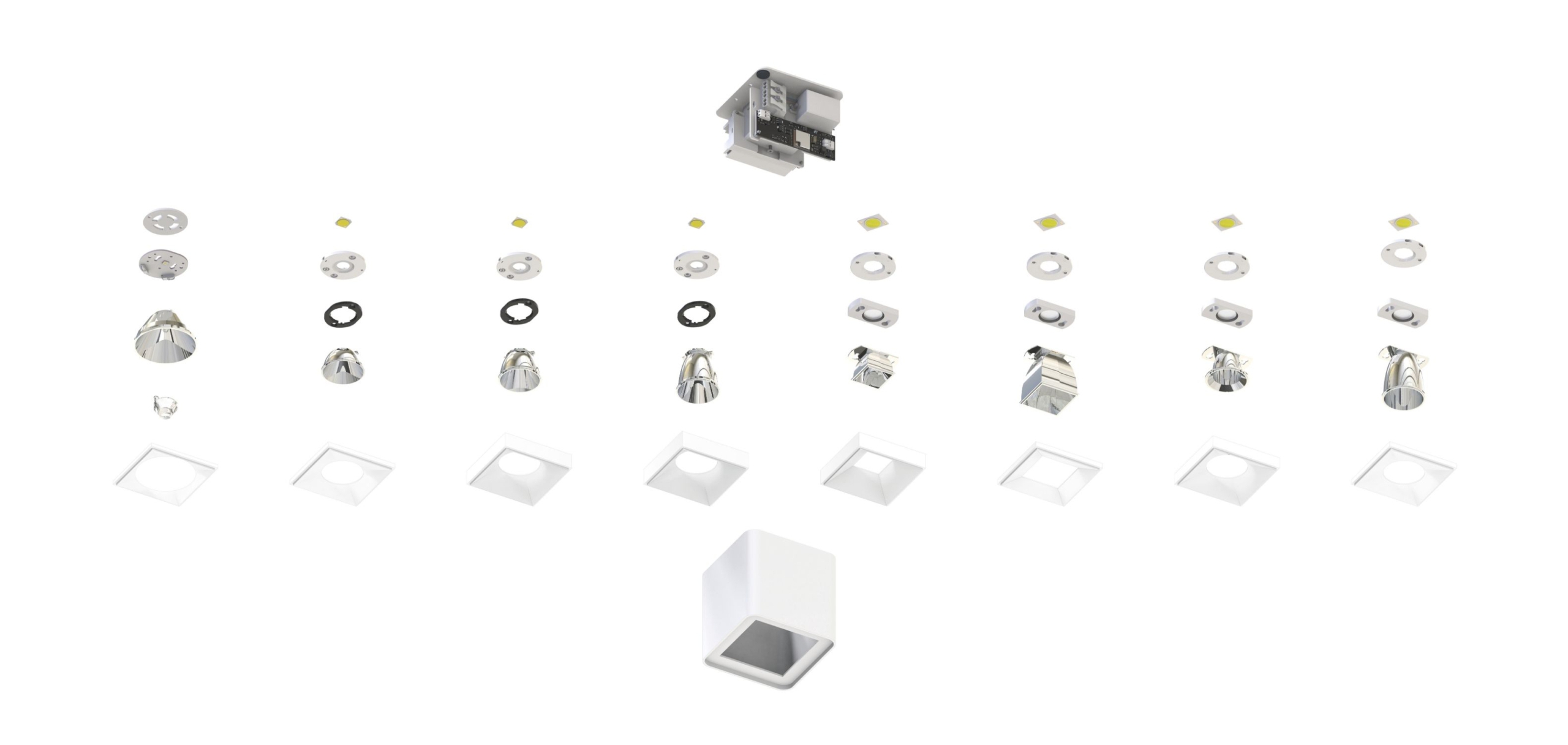
Figure 2: Excerpt illustration LMT modular lighting system; LMT
New development: For architecturally demanding or technically specific requirements, LMT creates a completely new lighting solution, considering all the parameters mentioned above and additional aspects such as thermal management, mechanical resilience, and individual design.
Modular solutions and new developments are not mutually exclusive; they are complementary tools within the same quality process.
The goal of this phase is to develop a system solution that is both technically and economically viable and precisely tailored to the project requirements.
Digital product development and simulation
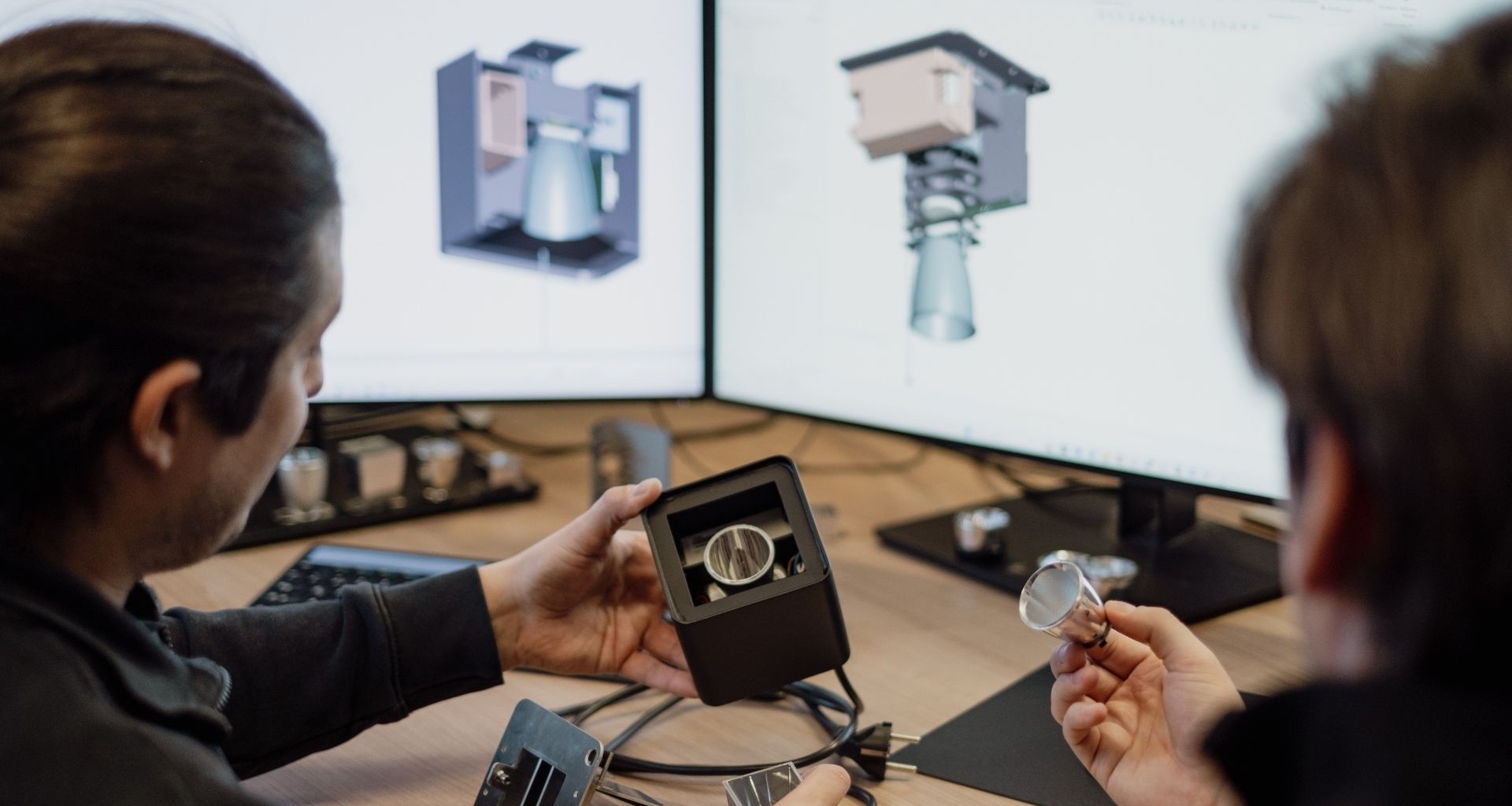
Figure 3: Luminaire design, LMT
LMT develops every lighting solution digitally. Using modern CAD and simulation tools, digital product models are created that realistically represent the geometry, function, and lighting effect before a physical component is produced.
3D design: Mechanical design and drawing creation for all components. Housing geometry, electronic components, and thermal heat sinks are integrated.
FEM calculation: Mechanical loads are analyzed using the finite element method (FEM). Material thicknesses and mounting points are validated.
Lighting simulation and ray tracing: Light distribution, glare, and luminance distribution are evaluated, and reflectors and lens systems are optimized. A pseudo color image simulation shows, for example, irregularities, overexposure, or dark areas. Ray tracing simulation calculates the path of light rays through reflection, refraction, and scattering. It is used for complex optics.
Thermal simulation: The LED operating temperature is visualized. This allows overheating risks to be identified and avoided at an early stage.
Photorealistic rendering: The lighting effect is visualized in an architectural context. This includes different color options and surfaces.
The digital models are used for technical validation and transparent coordination with the customer.
LED board and reflector: Core components of light quality
For new developments, LMT designs the LED circuit board and reflector with the highest precision and tailored to each project. The circuit board is developed with regard to electrical, thermal, and lighting properties, including the control electronics. The reflector or optics are optimized for targeted light distribution; the reflector material and surface quality (reflective, matte, structured) are defined. A prototype and photometric measurement validate the development results.
The LED circuit board and reflector have a decisive influence on the efficiency, light quality, and service life of the luminaire. They are optimized for each specific project.
Extruded profiles: Multifunctional components
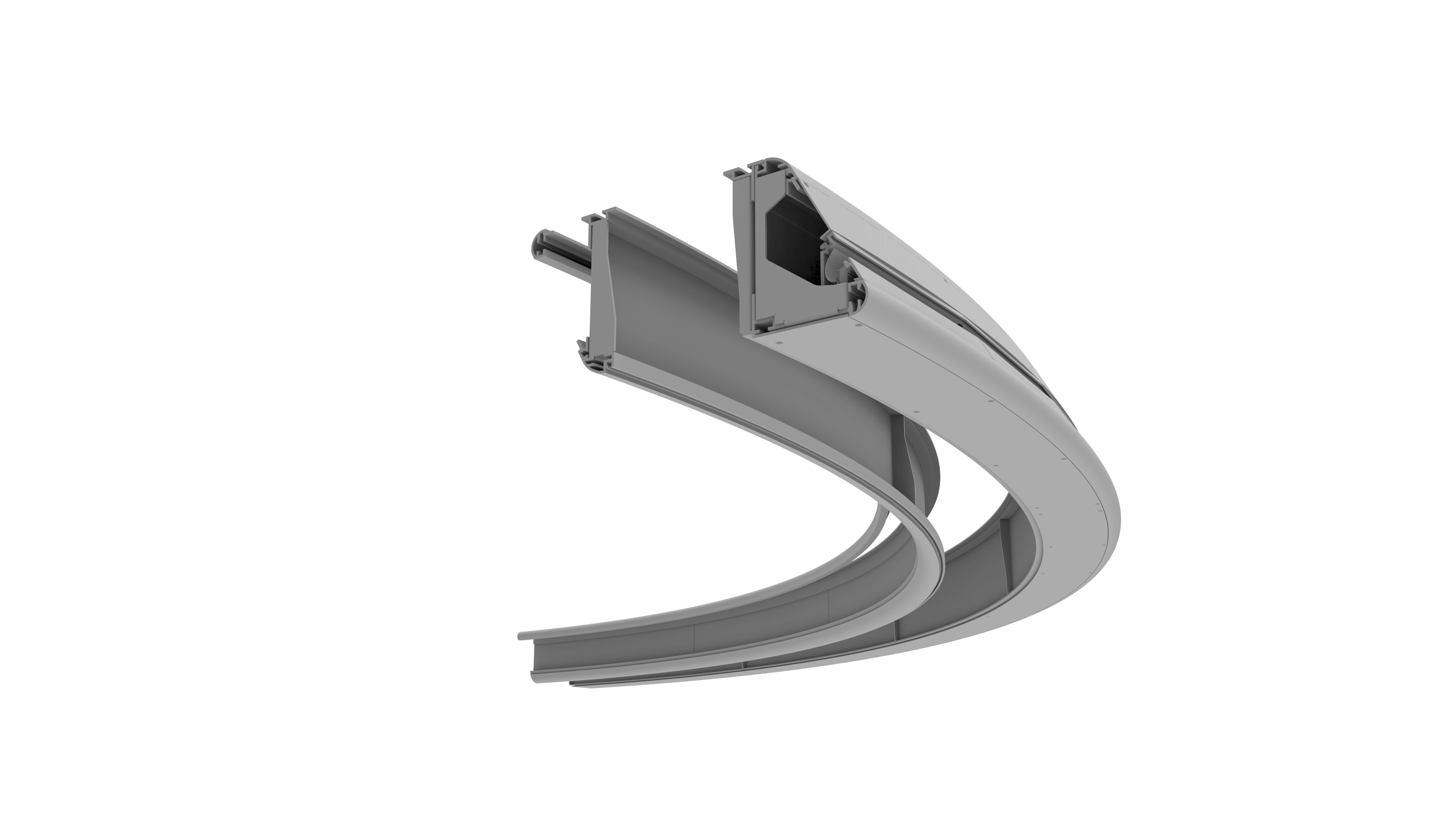
Figure 4: Extruded aluminium profile, LMT
Depending on the lighting situation, LMT develops specific extruded profiles made of aluminum, steel, or a combination of both materials. These profiles serve multiple purposes: providing mechanical stability, dissipating heat, accommodation electronics, and facilitating architectural integration.
The development is technically challenging, as thermal, mechanical, and design requirements must be combined in a single component.
Approval process
Once the digital development is complete, LMT presents the overall concept to the customer. Technical documentation, simulations, and visualizations make the function, lighting effects, and integration transparent. Manufacturing cannot begin until formal approval is given via the approval drawing.
Manufacturing
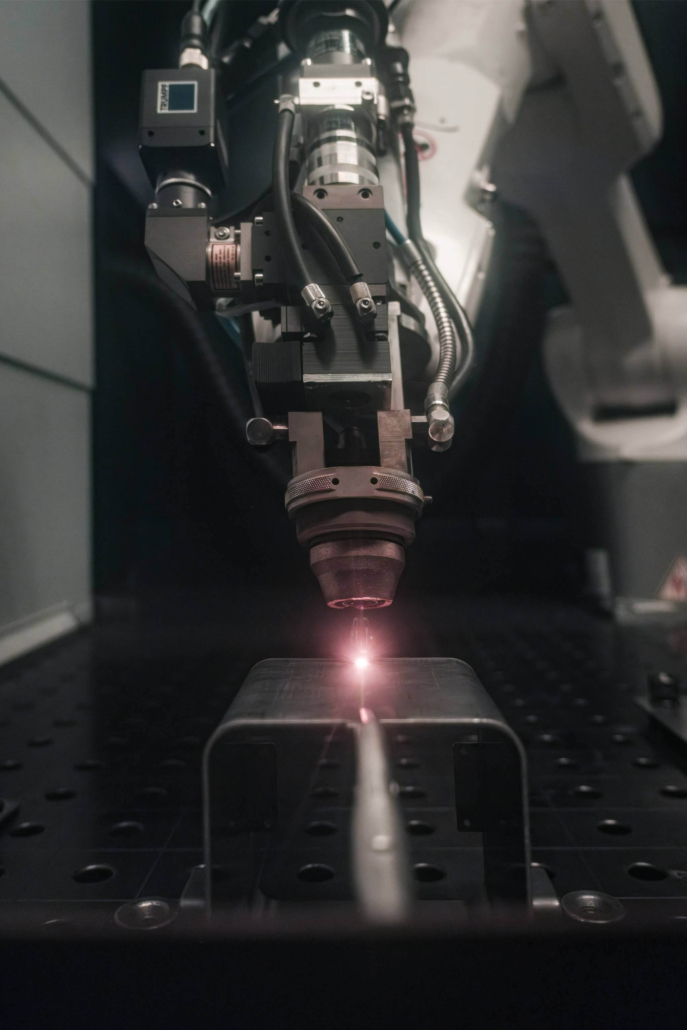
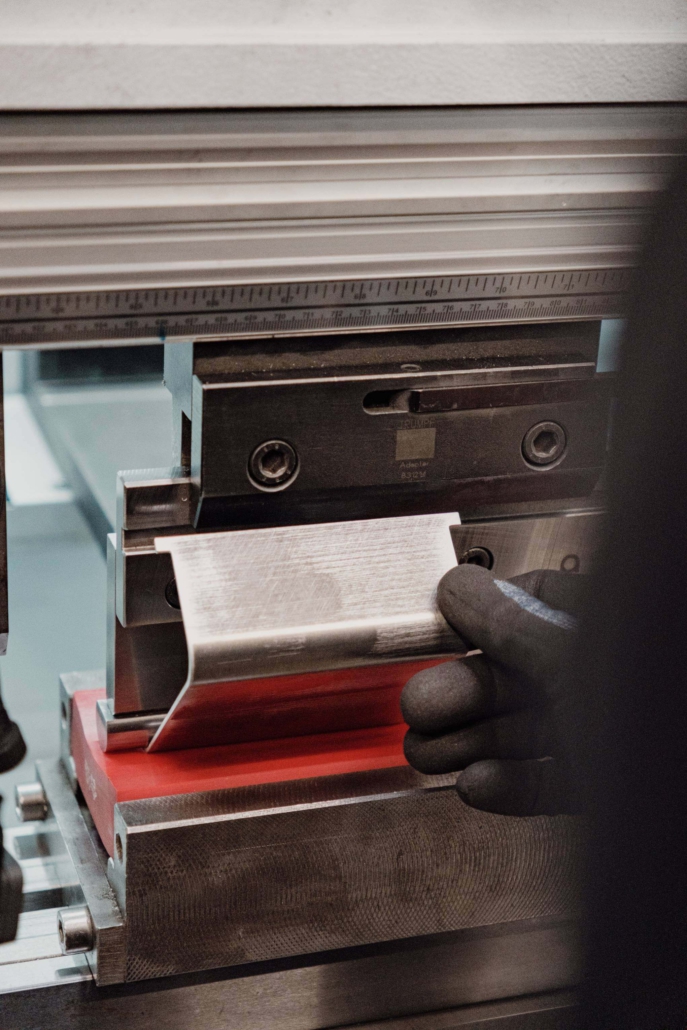
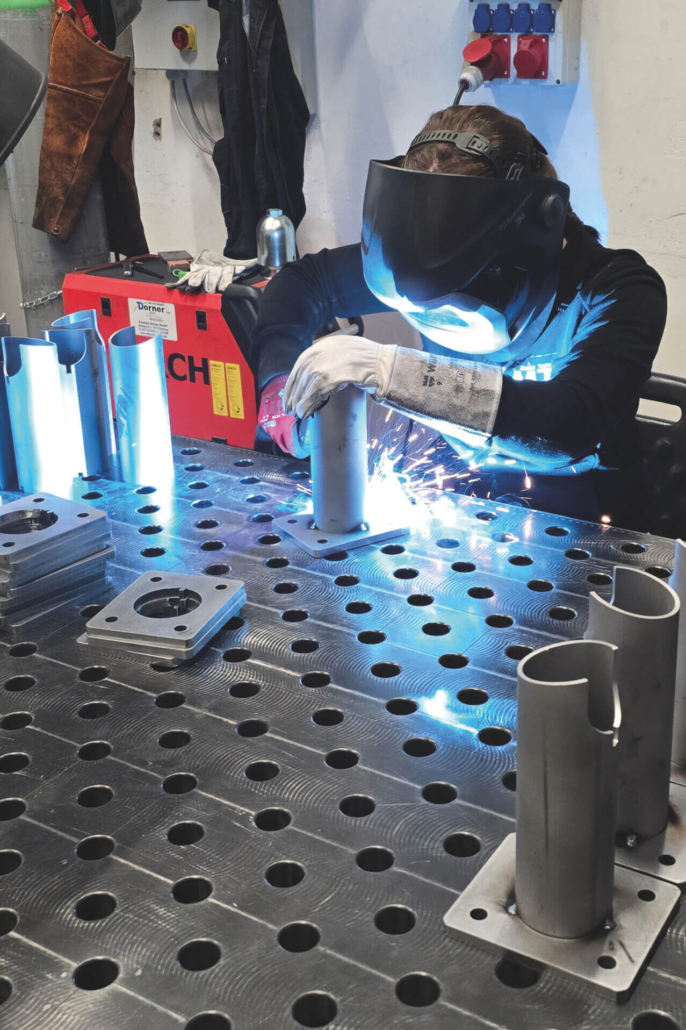
Figure 5: Manufacturing processes: welding and bending, LMT
Work preparation and material procurement
Once approval has been granted, work preparation begins. The design data is digitally converted into manufacturing information and structured. LMT creates parts lists, manufacturing drawings, work and time schedules, and quality documentation. All the necessary components, including LED modules, drivers, optics, housing parts, connecting elements, and aluminum profiles, are procured. Coordinated material logistics ensures that deadlines are met and quality is maintained.
Manufacturing processes
Depending on the product requirements, various manufacturing processes are used:
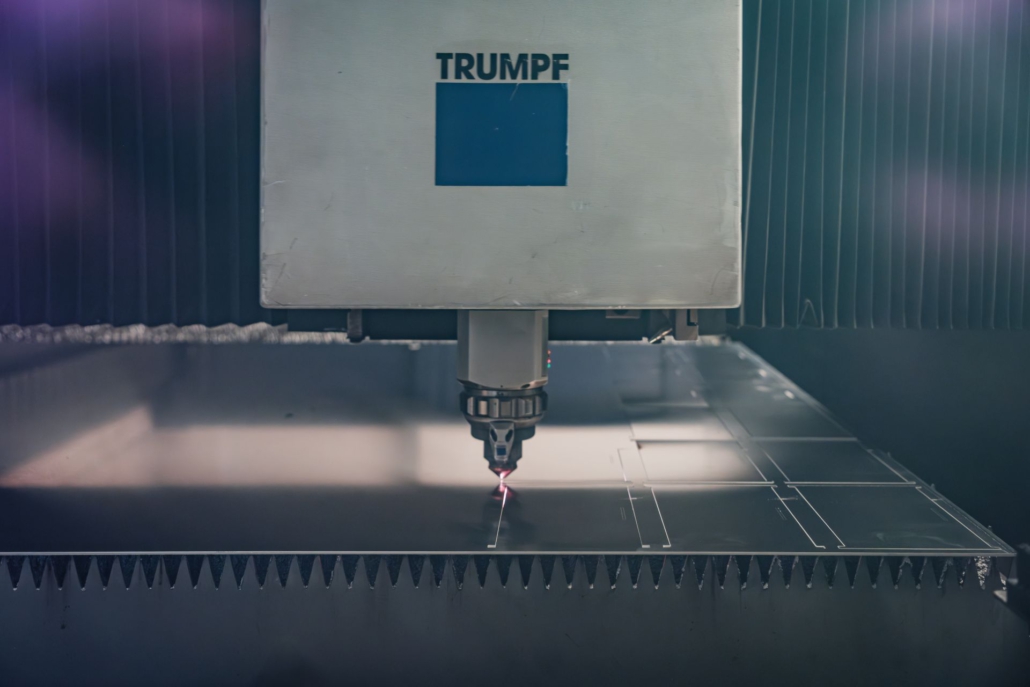
Figure 6: Manufacturing LMT, example of a Trumpf laser cutting machine in use
- Laser cutting
- Bending, in different variants depending on the component geometry
- Joining processes such as welding, mechanical joining, or laser joining
- Surface treatment and finishing, e.g., powder coating, wet painting, or anodizing
The selection of processes is project- and function-specific. It determines the technical quality and design of the luminaire.
Electrical assembly and thermal management
During electrical assembly, LMT professionally integrates the LED circuit board, driver, control components, and cabling. The LED circuit board is connected to the heat sink to ensure optimal heat transfer. Passive aluminum heat sinks dissipate heat via convection and radiation. The luminaire housing itself often functions as part of the cooling system. Reliable thermal management protects against premature failure due to overheating and prevents lumen degradation. The final functional test ensures that the electrical assembly is complete.
Lighting measurement
Photometric measurement evaluates physical radiation as perceived by the human eye. The central instrument is the light distribution curve (LDC) – it is a technical diagram that uses camera-based measurement systems to illustrate how a luminaire distributes its light throughout a room. The measurement is made in accordance with standards. It provides evidence of the planned lighting characteristics. The data is used for quality assurance and forms the basis for lighting design.
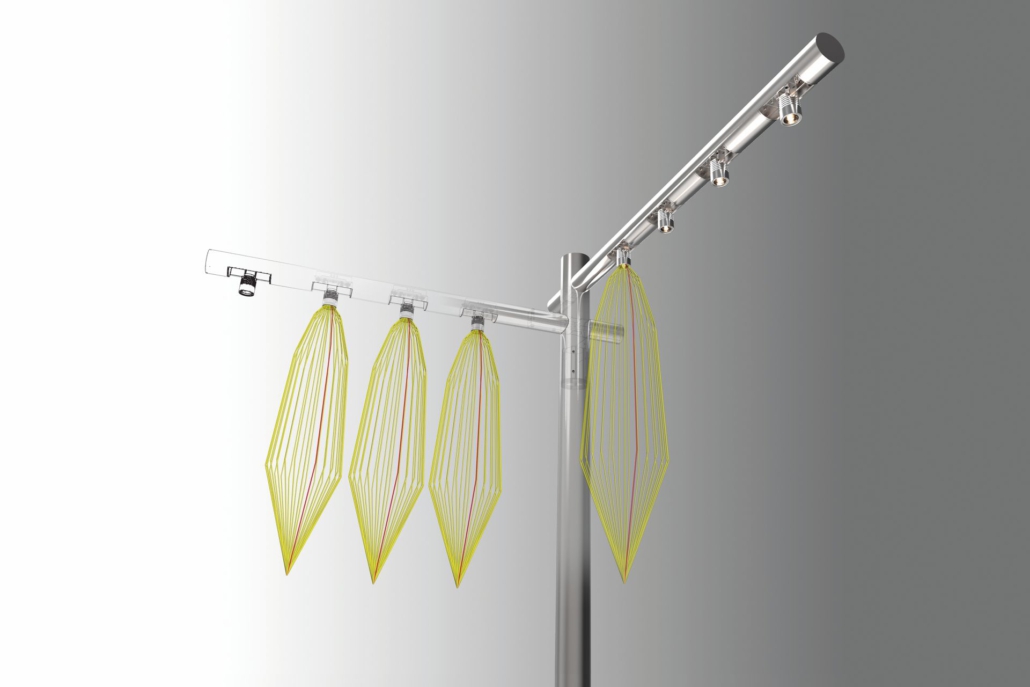
Figure 7: Lighting measurement, LMT
Luminaire function test
Finally, each luminaire undergoes comprehensive functional tests. Electrical safety, control functions, and dimming behavior are systematically checked.
Realization
Technical documentation, precise manufacturing documents, and structured installation preparation ensure that lighting systems are put into operation reliably. LMT provides the customer with all the necessary documents to ensure that commissioning can be carried out smoothly on-site.
At the customer’s request, LMT delivers using its own fleet of vehicles to ensure safe and realible transport. Upon special request, LMT or a commissioned partner will take care of installation and commissioning on-site.
The service provided by LMT does not end with delivery and commissioning. Technical support, subsequent delivery, reproduction, and component replacement ensure the longevity of the investment. Lighting solutions from LMT can be repaired and upgraded – with no planned end of life.
Conclusion: Integrated process as a quality feature
Architectural lighting and urban lighting design go far beyond product selection. The decisive factors are systematic requirements analysis, digital development that identifies and eliminates shortcomings at an early stage, and the reliable transfer of development data to production and operation.
For over 40 years, LMT has been combining technical, architectural, and economic requirements to create well-thought-out, future-proof lighting systems – and sees itself as a long-term partner.
Get in touch with us
Whether it’s an initial consultation at our booth at Light + Building 2026 or a project-related inquiry afterwards, we are available as a competent partner to architects, lighting designers, engineers, and building contractors.
Contact us directly – info@lmtgmbh.de.
Header image: Figure 1: Reference Alster indoor swimming hall, LMT